Categories
academic life medieval composers publications

A jointly authored monograph

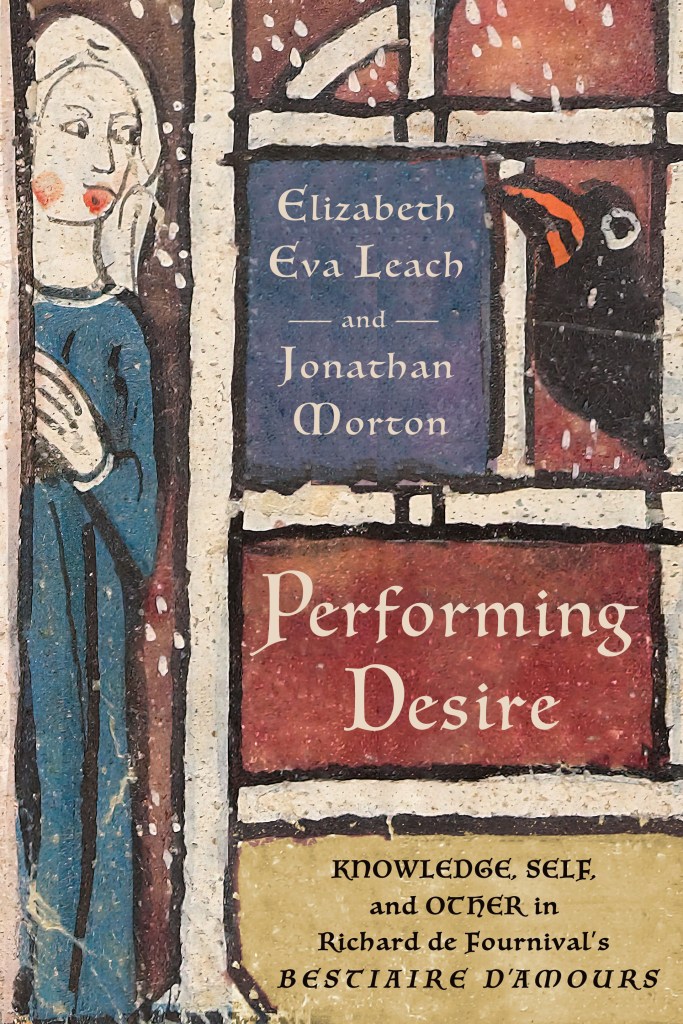
Book cover for 'Performing Desire: Knowledge, Self, and Other in Richard de Fournival's Bestiaire d'amours' featuring an illustration of a woman and a bird.

For years, Jonathan Morton and I have been thinking and talking about Richard de Fournival’s Bestiaire d’amours (Bestiary of Love). During the lockdowns of 2020 and 2021 we met for 90 minutes, four times a week over Zoom, with the same document open in OneDrive, to discuss this puzzling work and write down some thoughts. A much-honed version of these thoughts have now been published as a book: Performing Desire: Knowledge, Self, and Other in Richard de Fournival’s Bestiaire d’amours.

Writing an entire monograph with another scholar is a fairly unusual thing to do in the humanities, and our process felt pretty modern. It could not have happened without the ability for us both to be working on the same document in real time while also being in dialogue over a video call.

For me, as well as being a really fun and companionable way of keeping in touch during the strange social circumstances of a global pandemic, it was an interesting insight into our different ways of working, thinking, and writing.

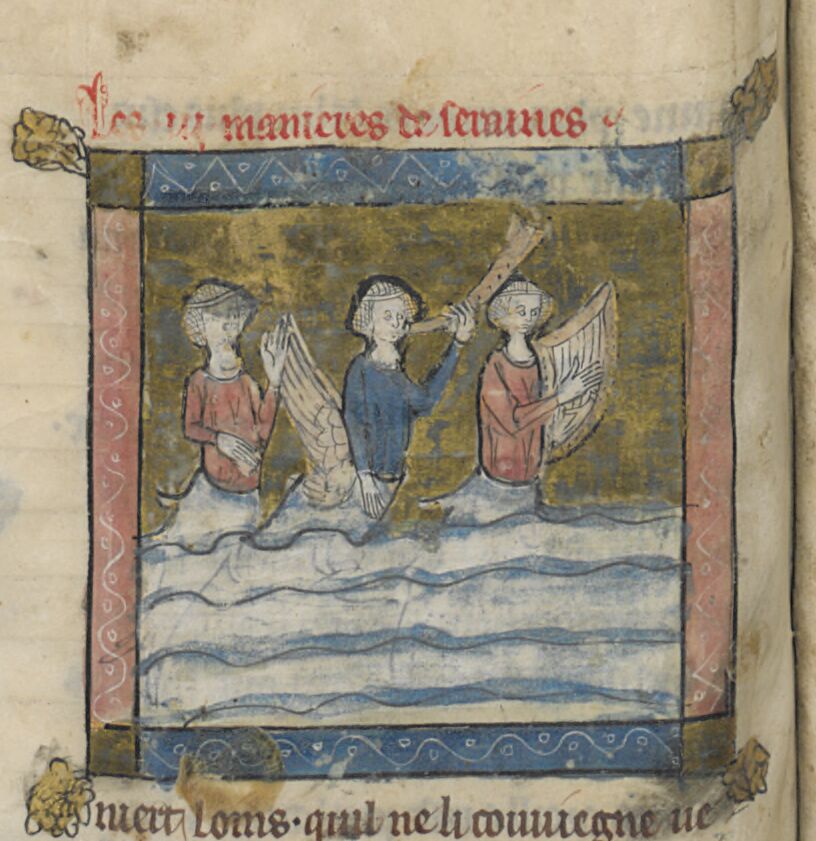
The nicest thing about the finished book is that we were able to include so many colour images. The book is available by clicking on the cover image above, but if you want to listen to an AI generated podcast giving a sense of its contents, I’ve uploaded one prepared by NotebookLM. You’ll have to forgive its inability to pronounce the French word ‘je’ (which comes out as jay).

We explore Richard de Fournival’s thirteenth-century text, the Bestiaire d’amours, which presents itself as a bestiary but functions as a cynical and parodic seduction attempt using animal lore. The book analyses the hybrid nature of Richard’s work, discussing how it stages a trial of textuality and blurs the lines between written and oral performance, often employing scholastic methods and lyric subtexts to undermine its own claims to authority. Key themes examined include the je-persona’s unreliable voice, the text’s confused epistemology (especially regarding vision, hearing, and the unreliable nature of resemblance), and the work’s commentary on place, bodies, and desire. We also discuss the work’s generation of responses of various kinds, highlighting its importance for the literary investigation of sexuality and textuality in the later Middle Ages.
Categories
academic life AI resoures Douce 308 project medieval composers music analysis pastourelle publications

New article on an odd song (free PDF download and an AI-generated podcast summary)

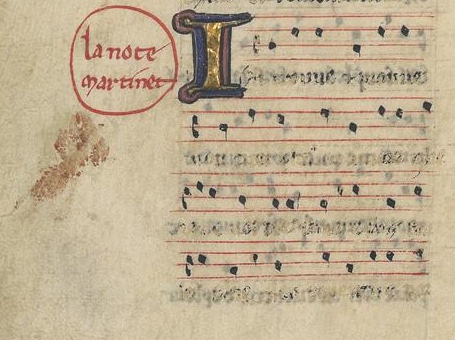
My new article on J’ai trouvé, an anonymous and oddly structured song by someone who was probably called Martin, has just appeared in the journal Plainsong and Medieval Music.

Here I re-examine a thirteenth-century texted dance song, ‘Marty’s tune’, which is uncommon for its survival in two sources, one with musical notation. I explore previous academic attempts to define the song’s form and genre, highlighting how these studies often prioritized a perceived ‘correct’ structure over the evidence in the surviving manuscripts. By comparing the textual differences between the two copies alongside the musical notation, the article proposes new understandings of the song’s compositional, scribal, and performance history. It suggests that the less formal aspects of the version without notation might indicate a closer connection to semi-improvised dance performances and argues that the term “note” may have been a broad description for a tune, rather than a strict genre or form label. Ultimately, I advocate for a re-evaluation of medieval pastourelles to include songs like “Marty’s tune,” which feature explicit carnal desire and physical interaction.

The PDF can be freely downloaded from the CUP site (link above).

For those of you that want an accessible audio summary, here’s a podcast produced by feeding the text to NotebookLM (from which the above text summary is also adapted). Enjoy!

Categories
Douce 308 project gender medieval composers pastourelle

Book launch pastourelle performance

On 6 Mar 2024 I had a party to celebrate the launch of Medieval Sex Lives, the first book launch party I’ve ever had, although it will not be the last! Nigel Bryant gave a lovely appreciation of my book and Joseph W. Mason and Matthew P. Thomson sang the third pastourelle from the subsection of pastourelles in Douce 308 to the tune of a song by Gautier de Coinci with which it shares its versification. I had provided an English singing translation and captured the performance on my phone. In the spirit of there being two women who perform both male and female parts in the robardel in The Tournament at Chauvency — a possibility that gave me much food for thought when writing the book — Matthew and Joe take the parts of the knight and shepherdess, respectively. I post the video below, with permission from the two singers and apologies for the sound recording quality and poor visual-angle, which are both my own fault. Nice to have this though and my thanks to them both.

And, to repost this link, for those of you keen to get a sense of Medieval Sex Lives without having to read it, I talk about its basic rationale and contents in a podcast episode on the New Books Network.

Categories
Douce 308 project gender medieval composers medieval French literature publications

Hear an interview about Medieval Sex Lives

Earlier this year I was interviewed for the New Books Network by Dave O’Brien about my new book, Medieval Sex Lives. You can hear the result here.

Categories
gender medieval composers medieval singers publications

My review of an edited volume on female-voice song

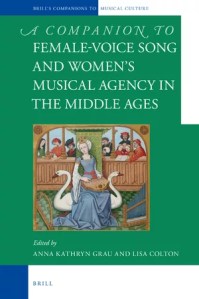
My review of Female-Voice Song and Women’s Musical Agency in the Middle Ages, edited by Anna Kathryn Grau and Lisa Colton has just appeared in Early Music. This book is part of the series Brill’s Companions to the Musical Culture of Medieval and Early Modern Europe and was published by Brill (Leiden) in 2022 at the somewhat eye-watering price of €215. Although reviewing large edited collections is quite a lot of work, I think it’s important to do so, especially when they’re pricey, as a way of informing potential readers of their contents in the hope that they might get a sense of whether to request their local library acquires the volume or, indeed, whether they fork out the money themselves. I think most universities libraries that teach music before 1500 and/or topics relating to women and music should probably buy this. I used the online version to write the review, which seemed pretty useful.

Categories
journal editing medieval composers publications

My second Early Music editorial

My second EM editorial is now on advance access on the OUP site. This one’s about my love of Sheppard, who is the subject of two of the articles in the issues that the editorial introduced (both also available in advance access too).

Categories
Guillaume de Machaut medieval composers medieval French literature public talks Teaching materials

I talk Machaut on BBC Radio 3

This week, the Early Music Show on Radio 3 broadcast an hour-long programme about Guillaume de Machaut. David Gallagher devised the programme after reading my book and my colleague Dr Uri Smilansky joined me in fielding questions from Lucy Skeaping to give an introduction to Machaut and some of his music. The programme is available (in the UK at least): here (starts 2’2” into the track).

Categories
blog-only publications Guillaume de Machaut medieval composers medieval French literature publications

Another Machaut patron revisited

A decade after I blogged about a web-only version of my paper proposing the Melun brothers as possible Machaut patrons, a revised version has been published in print.

The original version of this thesis was deemed unsuitable by Gesta because it was too much about music and unpublishable by JAMS because it was too little about music. Feeling that it was simply one of those articles that needed to be out there but which the current configuration of university disciplines was never going to permit to be in a peer-reviewed journal, I self-published it online.

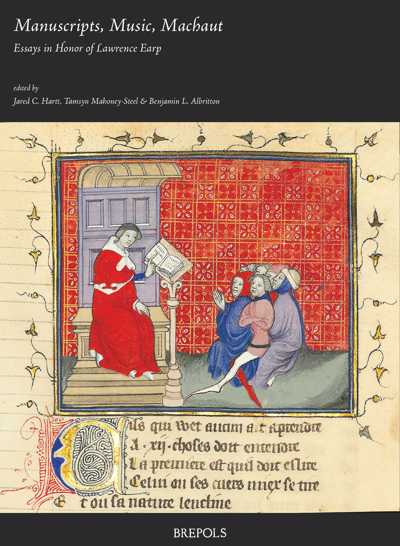
That version has been relatively widely used and cited by Machaut scholars in the years since 2012, so when the editors of a festschrift for the great Machaut scholar Lawrence Earp asked me to offer something, I eventually thought that an updated version of this paper might work well. This volume has now appeared and is exceptionally handsome, with plenty of fully integrated colour reproductions, including in my chapter where they have dutifully put the two recto MS pages on book rectos so that a reader re-experiences at least some of what a reader of the manuscript being discussed would experience.

Elizabeth Eva Leach, ‘Seeing Sens: A Picture of Two Guillaumes and Two Brothers?’

in Manuscripts, Music, Machaut: Essays in Honor of Lawrence Earp, ed. Jared C. Hartt, Tamsyn Mahoney-Steel, and Benjamin L. Albritton. (Turnhout: Brepols, 2022), 291–307.

Sadly I can’t offer an electronic offprint (I don’t have one) but I hope that you might be able to request this very beautiful book to your librarian if you want to read the many wonderful essays in it.

Categories
Guillaume de Machaut medieval composers medieval French literature

New book on Machaut MS C

Categories
medieval composers medieval singers Teaching materials

Vernacular song (list A) lecture 4

A brief look at another vernacular song tradition.