My new article on J’ai trouvé, an anonymous and oddly structured song by someone who was probably called Martin, has just appeared in the journal Plainsong and Medieval Music.
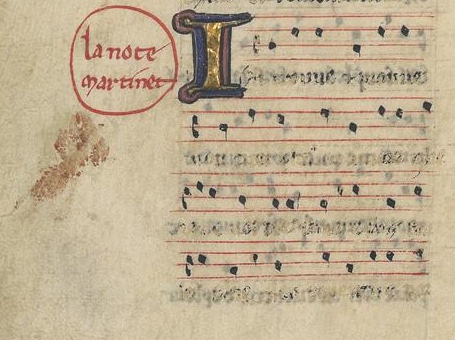
Here I re-examine a thirteenth-century texted dance song, ‘Marty’s tune’, which is uncommon for its survival in two sources, one with musical notation. I explore previous academic attempts to define the song’s form and genre, highlighting how these studies often prioritized a perceived ‘correct’ structure over the evidence in the surviving manuscripts. By comparing the textual differences between the two copies alongside the musical notation, the article proposes new understandings of the song’s compositional, scribal, and performance history. It suggests that the less formal aspects of the version without notation might indicate a closer connection to semi-improvised dance performances and argues that the term “note” may have been a broad description for a tune, rather than a strict genre or form label. Ultimately, I advocate for a re-evaluation of medieval pastourelles to include songs like “Marty’s tune,” which feature explicit carnal desire and physical interaction.
The PDF can be freely downloaded from the CUP site (link above).
For those of you that want an accessible audio summary, here’s a podcast produced by feeding the text to NotebookLM (from which the above text summary is also adapted). Enjoy!
 Elizabeth Eva Leach